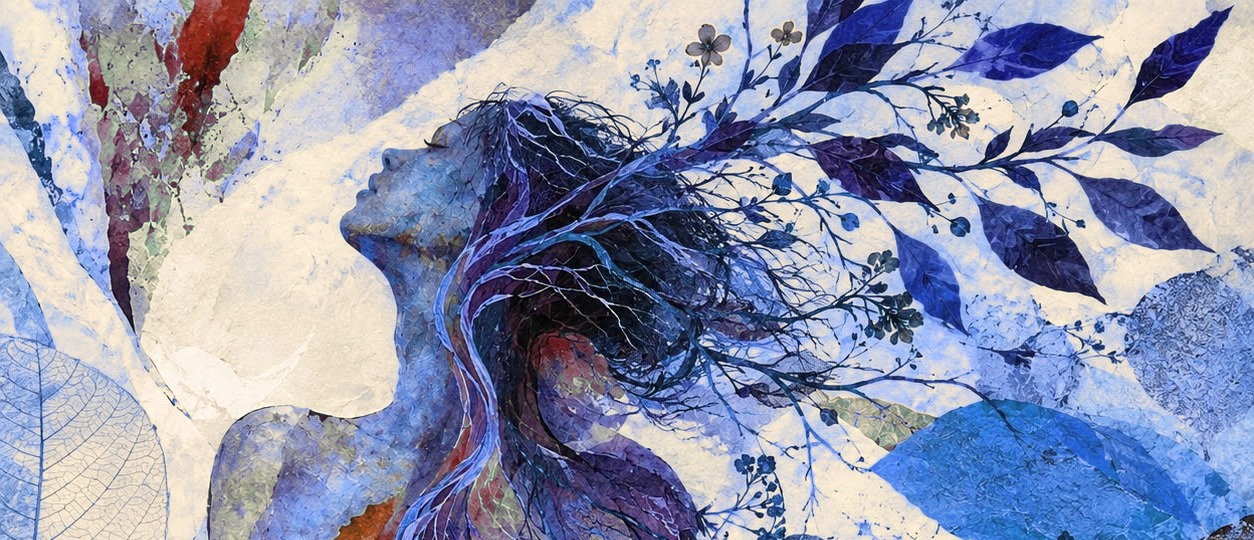
LINFA. Sensing what flows
This workshop takes place online: you can join from home, wherever you are.
An online art therapy experience through body, nature, movement and the transformation of images
There is an invisible movement running through a plant: the sap flows, nourishes, transforms. What if we tried to listen to what, within us, keeps on flowing?
LINFA (Italian for “sap”) is an experiential art therapy workshop that weaves together bodily listening, imagination and artistic language. Through simple practices of perception and movement, sensations and lived experiences become mark, colour, matter and form.
Sap is not something to depict: it becomes a metaphor for exploring what moves, what comes to a halt, what changes direction or seeks nourishment. The artistic process invites us to flow, to transform and to make room for the unexpected, including by working over images we have already made.
The experience, lived first-hand, ends with a moment of reflection on the process we have been through and, for those who work or train in art therapy and the helping professions, on its possible applications in different professional settings.
What, within us, is still flowing?
Aims
Through direct experience, LINFA invites you to:
- refine bodily and perceptual listening;
- recognise what moves, changes or seeks space within yourself;
- give shape to sensations and lived experiences through the languages of art;
- experiment with transforming, layering and reworking images;
- weave together movement, imagination, nature and the creative process;
- reflect, for those who work or train in the field, on how the experience might be applied in art therapy settings.
Materials needed
As the workshop takes place online, each participant will need to have the materials required to take part in the experiential activities. Please gather the items listed below in advance; there is no need to buy special or expensive materials and, where possible, you can use things you already have at home or collect outdoors.
Basic materials
- white paper, ideally in different sizes and weights, including a few larger sheets;
- tissue paper or other thin or transparent papers;
- coloured pencils, charcoal or graphite, felt-tip pens, watercolours and/or tempera paints, brushes;
- a container for water;
- glue and scissors.
Natural materials
- leaves, flowers or petals, seeds, acorns, pods, pine cones, small twigs, blades of grass or wild grasses, small pieces of bark. There is no need to buy them: they can be gathered outdoors, as long as they have already fallen.
Textural materials
- natural earths or pigments;
- coffee or tea for making traces and stains;
- thread or string;
- small scraps of fabric or paper.