Practitioner Training with ForMattArt Association
Training Course for Practitioners — Fine Motor Skills and Hands-on Activities I delivered this training course in collaboration with ForMattArt, a social promotion association in Milan that since 2011 has been designing and running art-educational activities in contexts of social vulnerability — from schools on the outskirts to residential facilities for at-risk children. The course was aimed at educators, teachers and practitioners who work with preschool and school-age children, with the goal of providing practical, immediately applicable tools for offering structured hands-on activities, both in the school context and in daily routines.
The Importance of Gesture
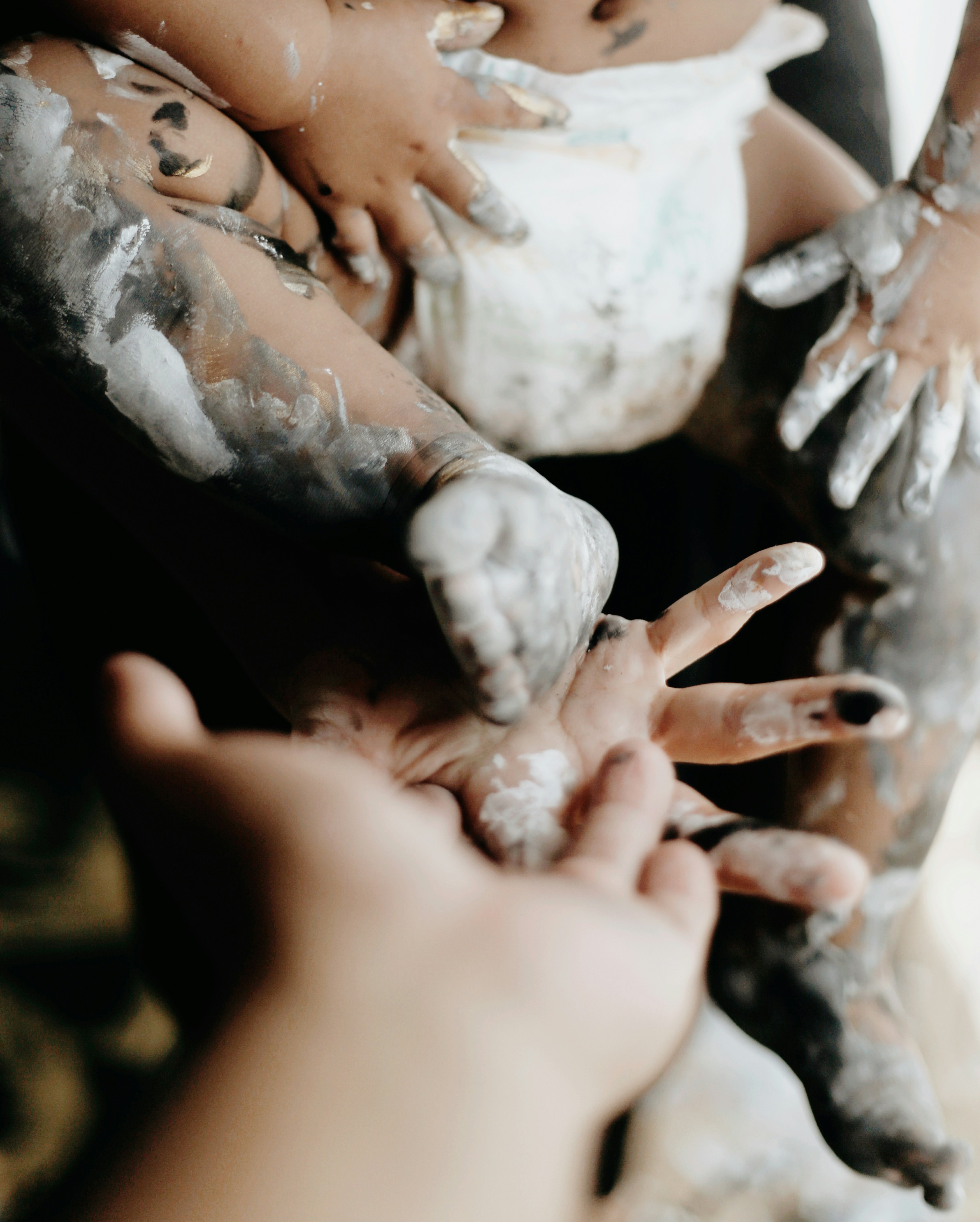
A child’s hand gesture is their first language. Kneading, tearing, modelling, threading: every hands-on activity trains hand-eye coordination, strengthens grip and prepares the ground for graphic skills and writing. But fine motor skills are also a powerful expressive channel, allowing the child to explore materials, discover sensations and give shape to their own creativity.
What the Course Covered
- The stages of fine motor skill development in children, from the palmar grasp to the pincer grasp
- How to observe and recognise potential difficulties in coordination and manipulation
- Practical proposals using simple, accessible materials: clay, salt dough, paper, fabrics, natural materials
- Graduated activities, from free manipulation to more structured exercises, adaptable to the child’s age and abilities
- Ideas for integrating fine motor skills into everyday routines: mealtimes, free play, table-based activities
The Outcome
The programme went beyond theory. Participants experienced first-hand an artistic process, working with their own hands on the materials and techniques proposed. Touching, modelling, creating: only by going through the act of making can one truly understand the value of hands-on work and offer it to children with authenticity.
The course draws on my experience as an art therapist in educational and rehabilitative settings. It is not a therapeutic programme but a practical training that enriches daily educational practice, giving practitioners new ideas and greater awareness in supporting children’s motor and creative development.